IoT and AI Application in Water Quality Management in 2025, and What it Means for 2026
In 2025 we passed an inflection point: water quality management moved from “monitor and react” to “sense, predict and optimize.”
Tiny sensors and better connectivity meant plants and distribution networks had much more real-time data. Smart algorithms finally learned how to turn that raw data into reliable actions: saving energ In 2025 we passed an inflection point: water quality management moved from “monitor and react” to “sense, predict and optimize.” y, cutting chemicals, and keeping effluent quality inside legal limits more consistently. These changes weren’t just experimental: academic studies and pilot programs published in 2024-2025 document measurable gains in performance and operational resilience. TerraConnect explains how digitalization of water tech has had a tremendous impact on the industry, particularly in the water quality management systems.
What actually changed in water quality management in 2025
- Continuous, cheap sensing at scale. Low-power IoT sensors have become more affordable and easier to deploy across treatment stages and distribution pipes. This created dense, continuous monitoring instead of sparse, manual sampling. That richer dataset is the foundation for all the AI benefits that followed, transforming water quality management practices.
- Machine learning for process control and forecasting. ML models from simple regressions to recurrent neural nets, started to predict influent shocks (big changes in incoming load), downstream effluent quality, and equipment failures. That allowed plants to proactively adjust aeration, chemical dosing, and sludge handling rather than chasing problems after they appeared, enabling predictive water quality management.
- Digital twins moved from concept to operations. Digital twin models (live virtual replicas of a plant or a distribution network) were used in 2025 to simulate changes, test control policies, and run “what if” scenarios without risking the real system. Peer-reviewed work showed that digital twins help reduce energy and chemical use while improving response times to anomalies in water quality management.
- Predictive maintenance lowered downtime and costs. Combining sensor streams with AI meant pumps, mixers, and blowers were monitored for signs of wear long before they failed. Predictive maintenance pilots reported fewer emergency repairs and longer equipment life, improving plant reliability and lowering lifecycle costs.
- Targeted detection of priority pollutants and operational risks. New sensor suites plus pattern-recognition algorithms improved early detection of microbiological upsets and industrial discharges. This is critical for protecting receiving waters and public health, and academic literature from 2024-2025 shows promising results in detecting shocks and keeping effluent within limits through advanced water quality management techniques.
Why these changes in water quality management mattered
- Lower energy use. Smarter aeration control and optimized pump schedules cut electricity consumption. Studies and pilot projects reported measurable reductions when AI controls replaced fixed schedules.
- Reduced chemical use. Predictive dosing keeps chemical additions closer to need, saving cost and reducing downstream chemical footprints.
- Faster regulatory compliance. Real-time quality predictions reduce surprise non-compliant discharges and enable faster corrective actions.
- Better customer and city outcomes. Cities and utilities began coupling these tools with GIS and complaint systems to address leaks, pressure issues, and contamination faster some public projects in 2025 even tied AI to citizen complaint resolution for better water quality management.
Limitations and real risks (what we learned in 2025)
- Data quality and integration remained a bottleneck. AI is only as good as the data it sees; inconsistent sensor calibration, missing historical records, and siloed systems slowed rollouts of advanced water quality management solutions.
- Cybersecurity and governance moved to the front page. As more control logic sits on networks, operators need stronger cyber hygiene and clear rules about data ownership.
- Skills gap. Operators need training to trust and work with AI recommendations in water quality management; and the upcoming Industry 5.0 era emphasizes the collaboration between human and machines.
What this means for water quality management in 2026: Practical impacts to expect
- Wider adoption, not just pilots. In 2026 we should expect more utilities to move from pilot projects to routine, production deployments of IoT+AI control layers. That will expand measurable benefits (energy, chemicals, uptime) across more plants.
- Bigger role for digital twins and regional models. 2026 will see digital twins used not just at individual plants, but across city regions to coordinate treatment and distribution, improving flood and drought response and optimizing reuse schemes.
- Regulatory and procurement shifts. Regulators will increasingly accept (and sometimes require) evidence from continuous monitoring and AI-based reporting. Procurement will favor solutions with explainable AI, security features, and clear maintenance plans.
- Faster detection of emerging contaminants. With improved sensing and pattern recognition, utilities will be quicker to spot industrial discharges or problematic chemicals, helping protect rivers and groundwater sooner. Research into monitoring and ML for specific contaminants is accelerating.
- Operational staff evolve into data-enabled managers. Plant teams will spend less time on manual adjustments and more time interpreting AI suggestions, managing exceptions, and focusing on system improvements. Training programs and partnerships between vendors and utilities will be critical.
The essential shift in 2025 was practical: AI and IoT moved from “nice-to-have” research to mission-critical tools in water quality management that actually save money, energy, and headaches. The next year 2026 is about scale, standardization, and governance. For utility managers and city planners, that means investing in sensors, data hygiene, staff skills, and secure architectures now, so they can safely reap the operational and environmental benefits as systems scale.
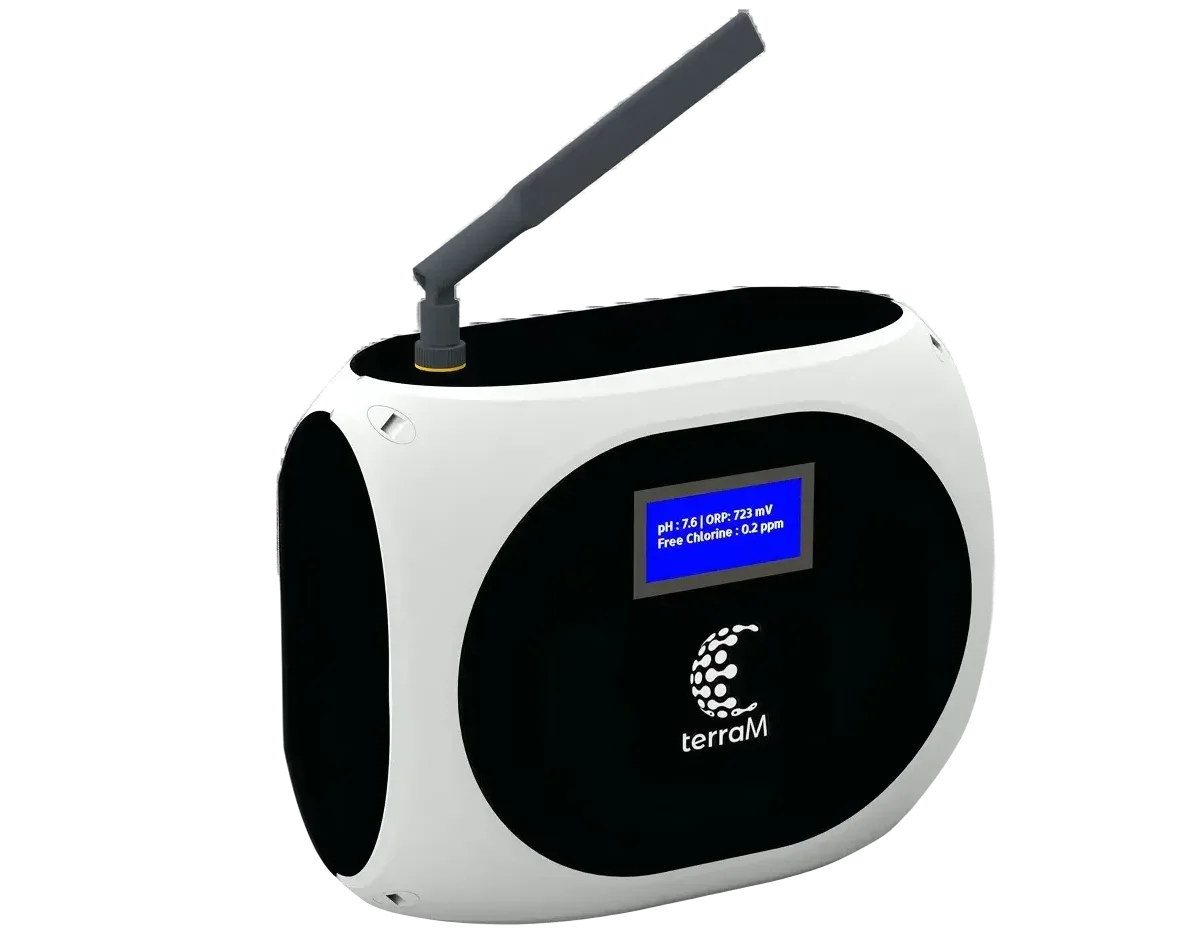
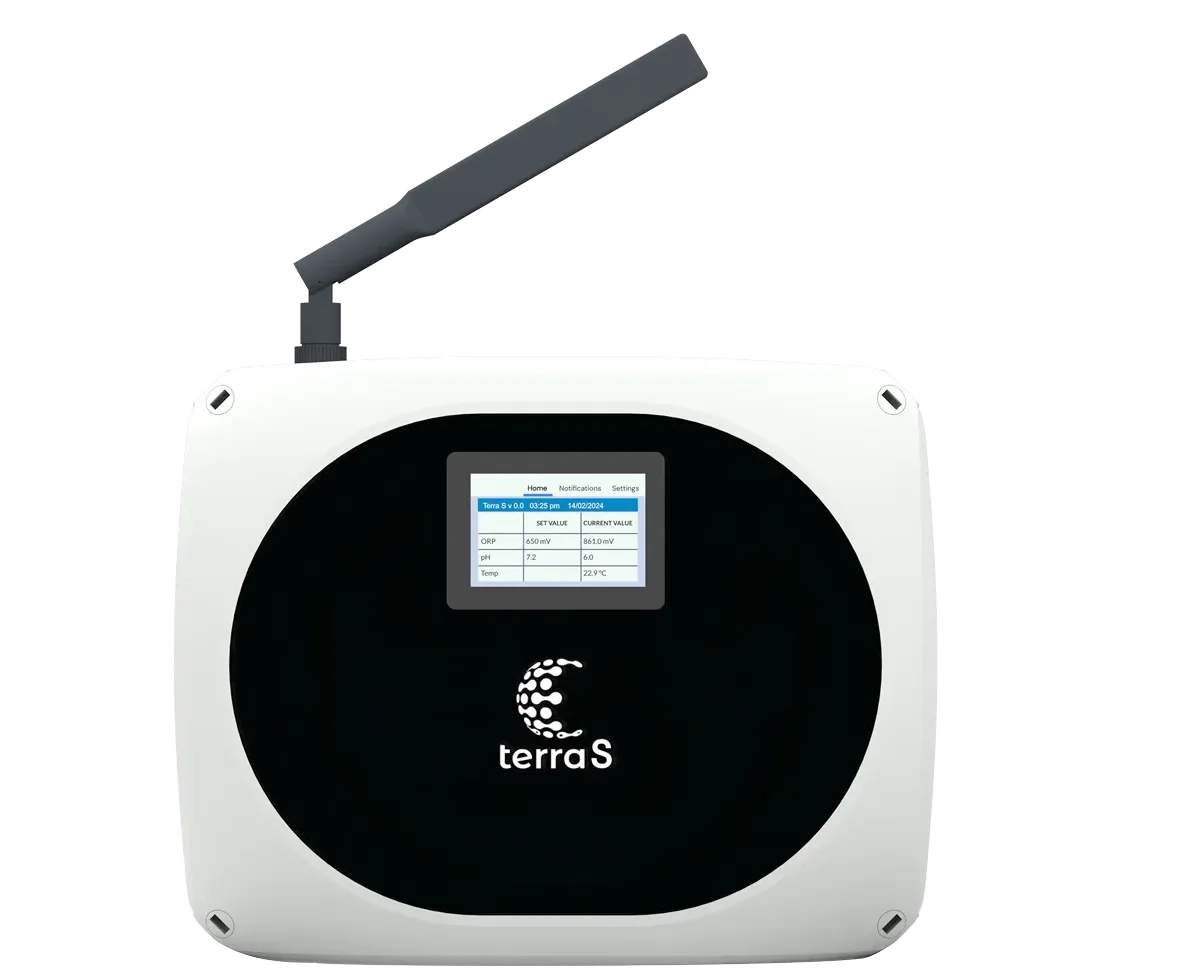
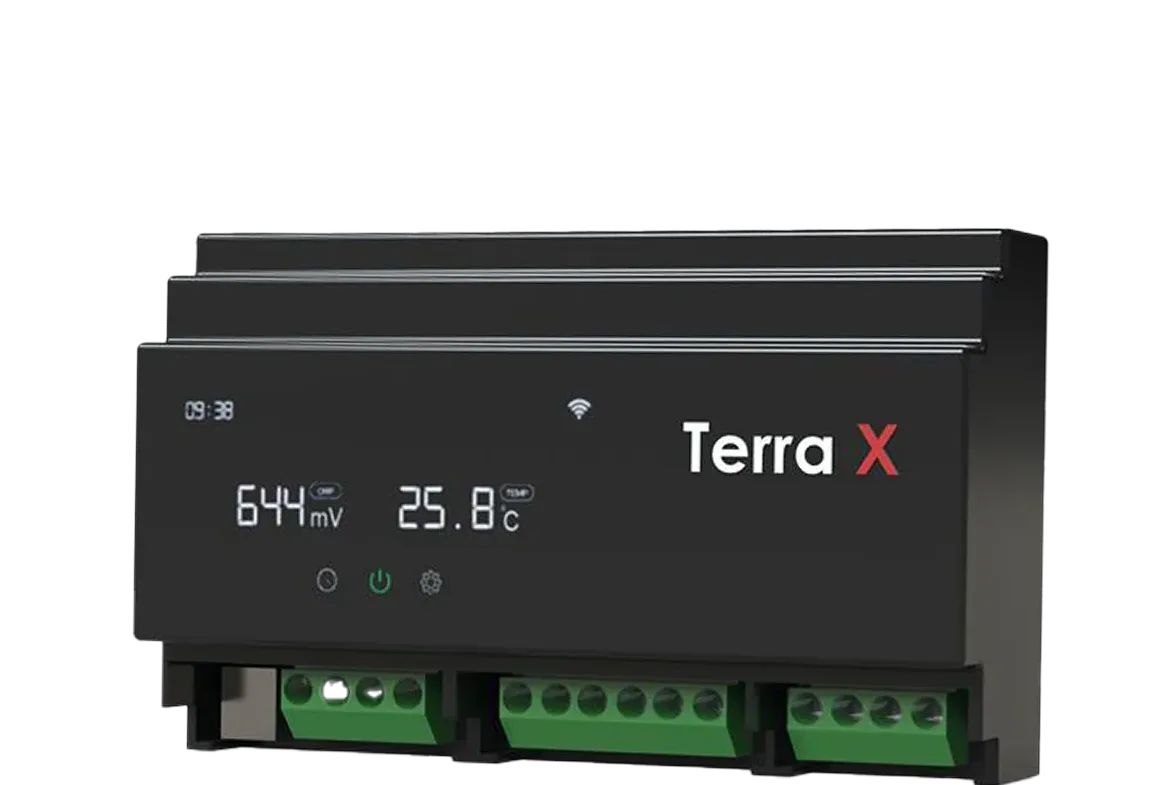
If you are one of those looking for a sustainable AI-IoT water quality management solution for your industry, connect with TerraConnect. Our wide variety of smart controllers have proven their excellence in areas like wastewater treatment plants, sewage treatment plants, RO plants, aquaculture, UV disinfection systems, with specialized services for swimming pool management.
With futuristic technology in hand, we ensure that sensor calibration and data transmission is smooth, making AI-based reporting consistent, helping in decision making and predictive analytics. TerraConnect believes that true transformation happens when humans and technology grow together. Therefore, we ensure that our personalized AI and IoT solutions are integrated with your industrial environments, and the operators are well informed of the technology behind the solutions that power modern water quality management.
As a company upholding customer service above anything, we guarantee that the safe management of your data would be our top priority. So, rule out the fear of data loss and gear up to welcoming the inevitable into your industry with TerraConnect: Digital Transformation in water quality management.

Categories
Recent Articles
One Device, Total Control: How Terra X Transforms Pool Management from Your Phone
Alex Joseph

Automated Backwash Systems for Effective Pool Management
Alex Joseph
IoT and AI Application in Water Quality Management in 2025, and What it Means for 2026
Alex Joseph