
How Ambient IoT and AI Are Transforming Water Treatment, Quality and Distribution
They sense, learn and respond on their own. This shift is being driven by what experts now call ‘Ambient IoT’.
For years, smart meters have been seen as the first big step in digital water management. They helped us measure consumption and detect basic irregularities. But the world is moving into a new phase of intelligence where water systems do more than collect data. They sense, learn and respond on their own. This shift is being driven by what experts now call ‘Ambient IoT’.
Ambient IoT is a simple idea. It means placing tiny, low power sensors into the environment so they quietly collect data without any manual involvement. These sensors operate continuously, using minimal energy and sending information to the cloud in real time. While traditional IoT depends on active devices that need higher power and more maintenance, ambient IoT focuses on passive, highly efficient sensing that blends into the background. It becomes part of the environment, rather than a device that needs attention.
This matters because water systems today operate under increasing pressure. Climate change, aging infrastructure and growing demand make water quality and water availability critical concerns. Facilities that deal with industrial water, pools, agriculture, or building management can no longer wait for periodic testing or manual monitoring. They need continuous visibility. Ambient IoT delivers this.
In many ways, ambient IoT is the next chapter of smart water technology. It produces data that is more consistent, more distributed and more precise. When AI tools are added on top, the system becomes predictive rather than reactive. Instead of discovering a problem after it has impacted operations, AI can warn teams in advance. This brings a powerful shift in how businesses plan maintenance, manage water safety and control operational costs.
Why Ambient IoT Matters for Water Tech
Water treatment and distribution networks are often spread out across large areas. They involve pumps, pipes, filtration units, chemical dosing systems and storage tanks. Each part is vulnerable to faults. Even a small delay in detection can lead to water loss, contamination risks, equipment damage or energy waste.
Ambient IoT makes it possible to track every part of this network with simple, reliable sensors that work quietly in the background. They can monitor pH, temperature, turbidity, flow, pressure, leakage and chemical dosing accuracy. They can also detect early patterns that signal potential issues. When combined with AI, the system can learn typical behavior and immediately report anything unusual.
This approach is different from traditional IoT which depends heavily on connected devices that are more complex and harder to scale across large networks. Ambient IoT uses ultra low power electronics that fit into pipes, tanks or equipment without increasing operational load. The result is a more sustainable and accessible way of building smart water systems.
Connecting Ambient IoT to Smart Controllers
For ambient IoT to deliver real value, the data it collects must move into an intelligent control system that can automate actions. This is where advanced smart controllers play a critical role. A controller acts as the bridge between sensing, cloud intelligence and physical automation. It receives data from sensors, applies logic or AI based insights and then adjusts the system as needed.
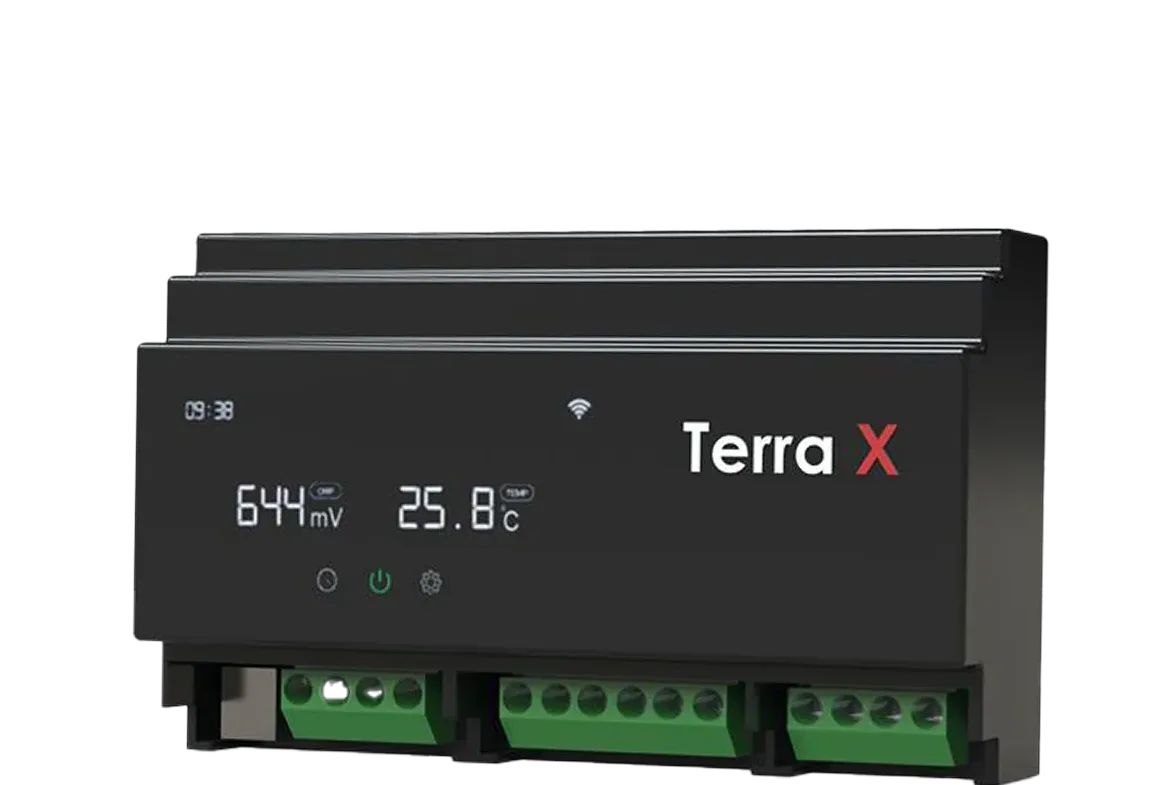
At TerraConnect, we design IoT hardware that supports this new era of ambient intelligence. Our flagship controller, Terra X, is created for businesses that want to modernize water management with a complete, unified IoT solution.
How Terra X Supports the Future of Ambient IoT
Terra X is built as an all-in-one IoT controller for water quality, automation and remote monitoring. It allows industries, agriculture and commercial facilities to handle water management on a single platform. This aligns perfectly with the idea of ambient IoT.
Here is how Terra X strengthens ambient IoT systems:
1. Continuous Real Time Monitoring
Ambient IoT sensors generate live data. Terra X collects this information instantly and displays it through a cloud dashboard. Users can track water quality, flow and equipment performance from anywhere. This brings full visibility, which is the core advantage of ambient IoT.
2. Intelligent Automation
Ambient IoT shows what is happening. Terra X ensures the system responds. It can automate dosing, control pumps, manage filtration cycles, trigger leak alerts and send maintenance reminders. This removes the need for manual intervention and increases operational reliability.
3. Custom Branding and Flexible Deployment
Many businesses want to offer IoT solutions under their own brand. Terra X makes this easy with white label software and customized interfaces. Companies can introduce smart water management solutions without building hardware from scratch.
4. Scalable Architecture for Large Networks
Ambient sensing only works when it is deployed across many points. Terra X is built to scale from single installations to enterprise level networks. This allows organizations to expand without replacing hardware or reworking existing systems.
5. Compatibility with Cloud Platforms
Terra X can be paired with platforms like NuWave to enable advanced analytics, AI driven alerts and long-term trend analysis. This is essential for predictive maintenance and resource planning.
Applications That Benefit Most
As ambient IoT spreads across the water industry, Terra X opens up possibilities in several sectors.
Industrial Water Management
Businesses gain real time insights into process water quality, helping them maintain compliance and prevent production delays.
Agricultural Irrigation
Farmers can automate irrigation based on soil and weather patterns. This leads to better yields and lower water waste.

Categories
Recent Articles
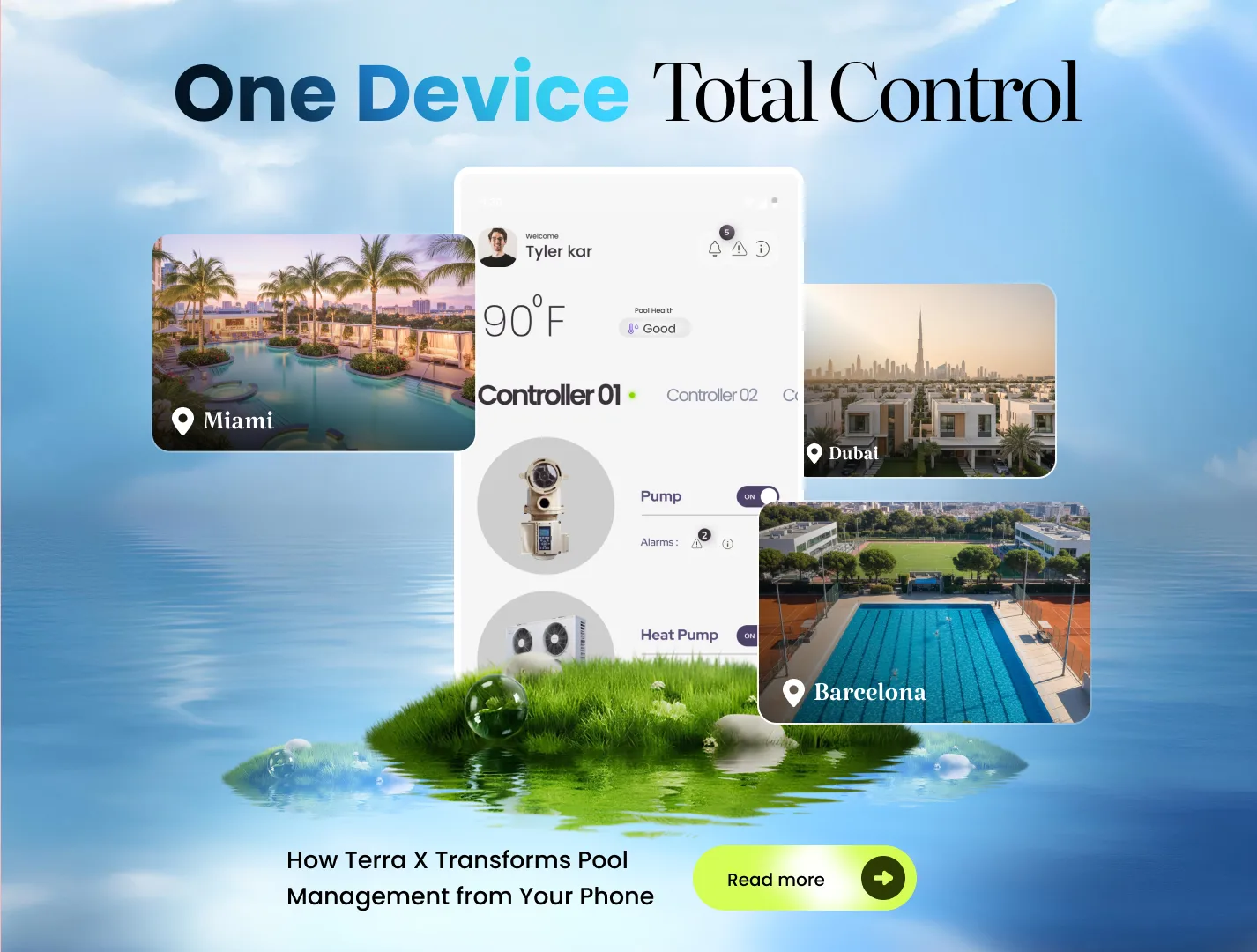
One Device, Total Control: How Terra X Transforms Pool Management from Your Phone
Alex Joseph
Automated Backwash Systems for Effective Pool Management
Alex Joseph
IoT and AI Application in Water Quality Management in 2025, and What it Means for 2026
Alex Joseph
