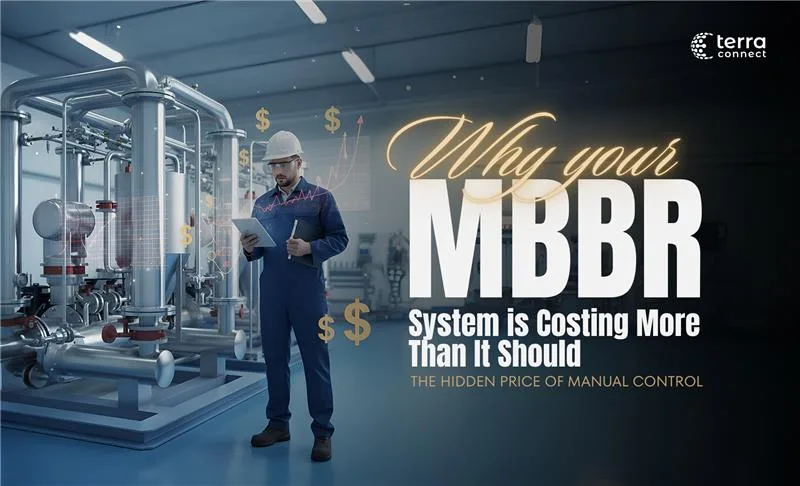
Why Your MBBR System is Costing More Than It Should: The Hidden Price of Manual Control
You invested in a Moving Bed Biofilm Reactor system (MBBR) wastewater treatment system because it promised efficiency, reliability, and cost savings. And it delivered, at least compared to older treatment methods.
But here’s the uncomfortable truth: your MBBR is probably costing you far more than it should.
The problem isn’t the MBBR technology itself. Moving Bed Biofilm Reactor systems are excellent at treating wastewater. The real issue is how you are controlling it.
The Silent Budget Drain
Think about how your MBBR operates right now. Your blowers run at full speed throughout the day and night, pushing air into the system whether it needs maximum aeration or not. Your operators add chemicals based on periodic testing and experience, hoping they’ve added the right amount. Someone walks to the treatment plant multiple times per shift to check if everything looks okay.
This is manual control, and it’s bleeding money from your operations every single day.
Your electricity bills stay high because those blowers never slow down. You are buying more chemicals than necessary because precise dosing is impossible without real-time feedback. You are paying staff to monitor systems that could monitor themselves. And every month, you are hoping nothing goes wrong between those manual checks.
When Problems Hide Until It’s Too Late
The biggest danger of manual control isn’t just the everyday waste. It’s what you can’t see.
Your system might be developing a problem right now. A pump bearing could be wearing out. The pH might be drifting outside the optimal range. A clog could be building up slowly in your filters. But you won’t know until someone happens to check, or worse, until something fails completely.
By then, the damage is done. Your biofilm crashes. Your effluent quality drops. You face potential compliance violations. Emergency repairs cost several times more than planned maintenance. And if your system goes down overnight or during a weekend, those costs multiply even further.
For hotels, this means guest complaints about odors. For industries, it means production disruptions. For residential complexes, it means angry residents and worried management committees.
The Power of Automation in Water Tech
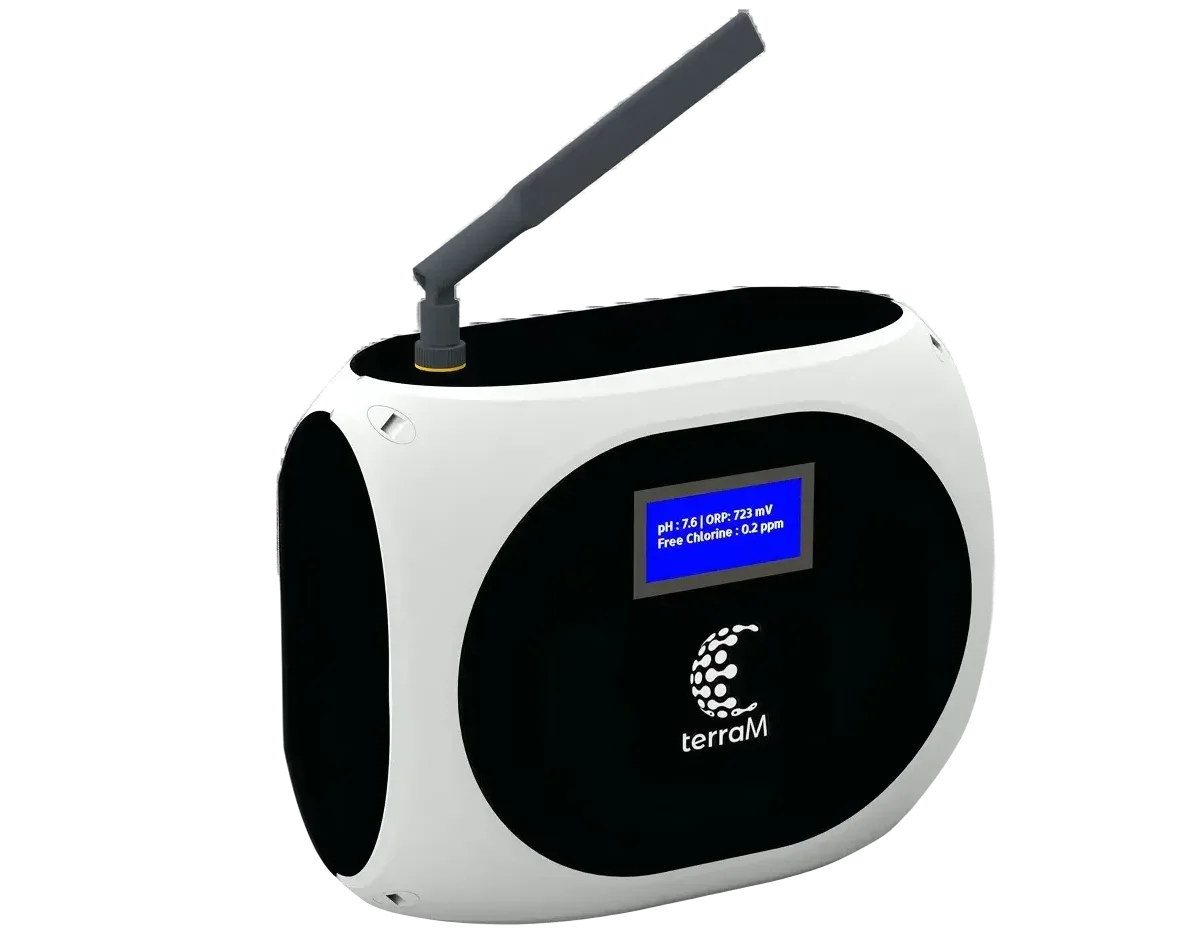
This is where modern automation in water tech changes everything, and Terra M from TerraConnect leads this transformation.
Terra M isn’t just another monitoring device. It’s an advanced IoT remote monitoring solution that serves as the brain your MBBR system has been missing. It continuously watches seven critical parameters that determine how well your treatment system performs: pH levels, oxidation-reduction potential, turbidity, total dissolved solids, pressure, electrical current, and free chlorine when needed.
But monitoring alone isn’t enough. Terra M takes action based on real-time data.
When the pH starts to drift, Terra M automatically doses the right chemicals to bring it back to optimal levels. When organic load decreases at night, it tells your blowers to slow down and save energy. When it detects unusual pressure readings that signal a developing clog, it alerts you before the problem becomes critical.
Water Quality Management from Anywhere
The system connects to your facility’s internet through WiFi or a built-in cellular connection, making it a true IoT remote monitoring solution that keeps you connected to your operations. You can check your wastewater treatment status from anywhere. Sitting in a meeting? At home for the evening? Managing multiple properties across the city? Your water quality management is always visible on your phone.
This level of connectivity transforms how you approach wastewater treatment. Instead of being tied to your facility, you gain the freedom to manage operations remotely while maintaining complete oversight of your system’s performance.
Smart Automation That Actually Saves Money
Terra M’s dual dosing pumps handle chemical addition with precision that human operators simply cannot match. The system measures, calculates, and doses based on real-time conditions, not guesswork or fixed schedules. This automation in water tech means you use exactly what you need, nothing more.
The three powerful relays can control your pumps, blowers, and other equipment safely, each handling substantial electrical loads. More importantly, Terra M can adjust pump speeds automatically based on what your water conditions actually require. Your blowers run faster during peak load times and slower when demand is low. This variable operation dramatically cuts your electricity consumption while actually improving treatment performance.
Every piece of data gets stored securely in the cloud. This isn’t just for your convenience. When regulators ask for compliance documentation, you have complete, timestamped records ready instantly. No scrambling through logbooks or trying to remember what happened last month.
A Complete Wastewater Treatment Solution
Terra M works across an impressive range of applications, offering a comprehensive wastewater treatment solution wherever MBBR systems operate.
Hotels and resorts use Terra M to manage their operations without dedicating staff to constant monitoring. The system handles daily variations in load as guest occupancy changes, ensuring consistent water quality management without manual adjustments.
Residential complexes benefit from simplified management. Association boards don’t need technical expertise when this IoT remote monitoring solution handles the complexity. Residents stay happy because the system prevents the odor problems that come from poorly managed treatment plants.
Food and beverage manufacturers face strict discharge standards and variable wastewater from different production schedules. Terra M adapts to these changes automatically and maintains the documentation these regulated industries require for effective water quality management.
Pharmaceutical companies need audit-ready records and fail-safe operation. Terra M provides both continuous monitoring and instant alerts if anything moves outside acceptable parameters, making it an ideal wastewater treatment solution for regulated environments.
Chemical and pulp industries deal with challenging wastewater and often operate multiple treatment facilities. Terra M’s remote monitoring capability means one team can oversee several sites effectively, catching issues early across all locations.
The Question You Need To Answer
Here’s what it comes down to: how much longer can you afford to operate your MBBR with yesterday’s control methods?
Every day without intelligent automation in water tech means wasted energy, excess chemical use, and risk of expensive failures. Your competitors might already be cutting these costs while you’re still doing things the manual way.
The technology exists to transform your MBBR from a system you worry about into one that simply works, efficiently and reliably, with minimal intervention.
Terra M from TerraConnect gives you that intelligence. It turns your MBBR into a smart, self-optimizing system that saves money, ensures compliance, and lets you focus on your actual business instead of wastewater management.
This IoT remote monitoring solution represents the future of water quality management, bringing enterprise-grade automation to wastewater treatment operations of all sizes.
Take The Next Step
Ready to see how much smarter your MBBR can be? Visit the TerraConnect website to explore Terra M’s full capabilities, download detailed specifications, and discover exactly how this advanced wastewater treatment solution can transform your operations.
Your MBBR deserves better than manual control. Give it the intelligence it needs with Terra M’s powerful combination of automation in water tech and comprehensive water quality management. Connect with TerraConnect, today!

Categories
Recent Articles
One Device, Total Control: How Terra X Transforms Pool Management from Your Phone
Alex Joseph
Automated Backwash Systems for Effective Pool Management
Alex Joseph
IoT and AI Application in Water Quality Management in 2025, and What it Means for 2026
Alex Joseph